Why Make This Recipe
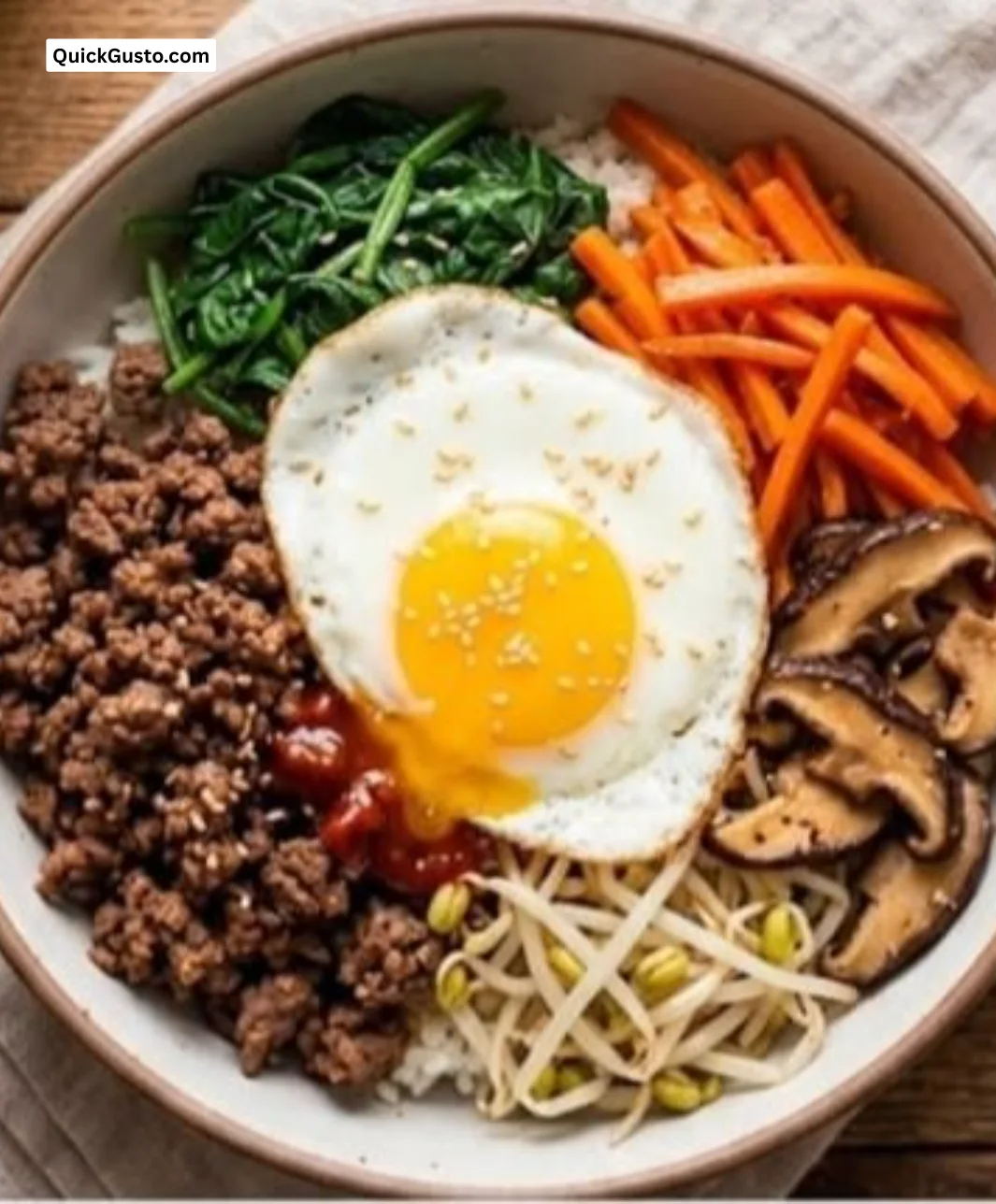
Easy Bibimbap is a delicious and colorful Korean dish that brings together a mix of flavors and textures. It is not only satisfying but also healthy, making it a perfect meal for any day of the week. The combination of rice, vegetables, and protein means you will get a well-balanced dish. Plus, it’s easy to customize with your favorite ingredients. This dish also serves as a great way to use up leftover vegetables!
How to Make Easy Bibimbap
Ingredients:
- 1 cup cooked rice
- 200g ground beef
- 2 cups assorted vegetables (e.g., carrots, zucchini, spinach, mushrooms)
- 2 eggs
- 2 tablespoons soy sauce
- 1 tablespoon sesame oil
- Gochujang (Korean chili paste) to taste
- Salt and pepper to taste
- Sesame seeds for garnish
Directions:
- Cook the ground beef in a skillet over medium heat until browned. Season with soy sauce, sesame oil, salt, and pepper.
- Sauté each vegetable separately in a little oil until tender, seasoning with salt.
- In another pan, fry the eggs sunny-side up.
- In a bowl, place a scoop of rice and top it with the cooked beef and sautéed vegetables.
- Place the fried egg on top and drizzle with gochujang.
- Garnish with sesame seeds and serve.
How to Serve Easy Bibimbap
Serve Easy Bibimbap in individual bowls. Each person can mix their own bowl to combine all the delicious flavors. It pairs well with a side of pickled vegetables for added crunch and flavor.
How to Store Easy Bibimbap
To store leftovers, keep the rice, beef, and vegetables in an airtight container in the fridge for up to 3 days. You can store the cooked eggs separately, as they are best enjoyed fresh. Reheat everything on the stovetop or in the microwave before serving again.
Tips to Make Easy Bibimbap
- Cook the rice ahead of time and refrigerate for easy assembly.
- Use any vegetables you like; bell peppers, broccoli, or bean sprouts work well too.
- For added flavor, include some chopped green onions or a sprinkle of furikake (Japanese rice seasoning).
Variation
You can easily make a vegetarian version of Easy Bibimbap by substituting the ground beef with tofu or tempeh and using more vegetables or mushrooms for protein.
FAQs
Can I use brown rice instead of white rice?
Yes, brown rice can be used for a healthier option. Just be sure to cook it longer.
What if I can’t find Gochujang?
If you can’t find Gochujang, you can substitute it with a mix of chili paste and a little soy sauce for some heat.
Is Bibimbap gluten-free?
To make Easy Bibimbap gluten-free, use gluten-free soy sauce or tamari instead of regular soy sauce.